


Turnover and wellbeing are tightly linked: when mental health suffers, people are more likely to disengage, burn out and ultimately leave, whereas visible, credible wellbeing support can improve retention and loyalty.
According to Gallup’s report, employee turnover can cost from one-half to twice the employee’s annual salary, depending on their seniority. Turnover disrupts workflow and established team dynamics. In addition, new hires will need time to become fully productive. All of this adds up to significant costs for the company and an emotional burden on the remaining team members.
Digital mental health platforms can bridge this gap by making support accessible, data-informed, and continuous, rather than relying on sporadic initiatives or overstretched managers.
While turnover can be seen as a natural event in a company over time, a high level of voluntary turnover is a symptom of deeper issues. What is considered high turnover will vary by industry and even by country.
In the UK, for example, as shown below, in 22-23, hospitality had the highest turnover rate, at over 40%. A turnover rate between 10–15% can, in general, be considered normal, but as we see, it really depends on the industry you look at.
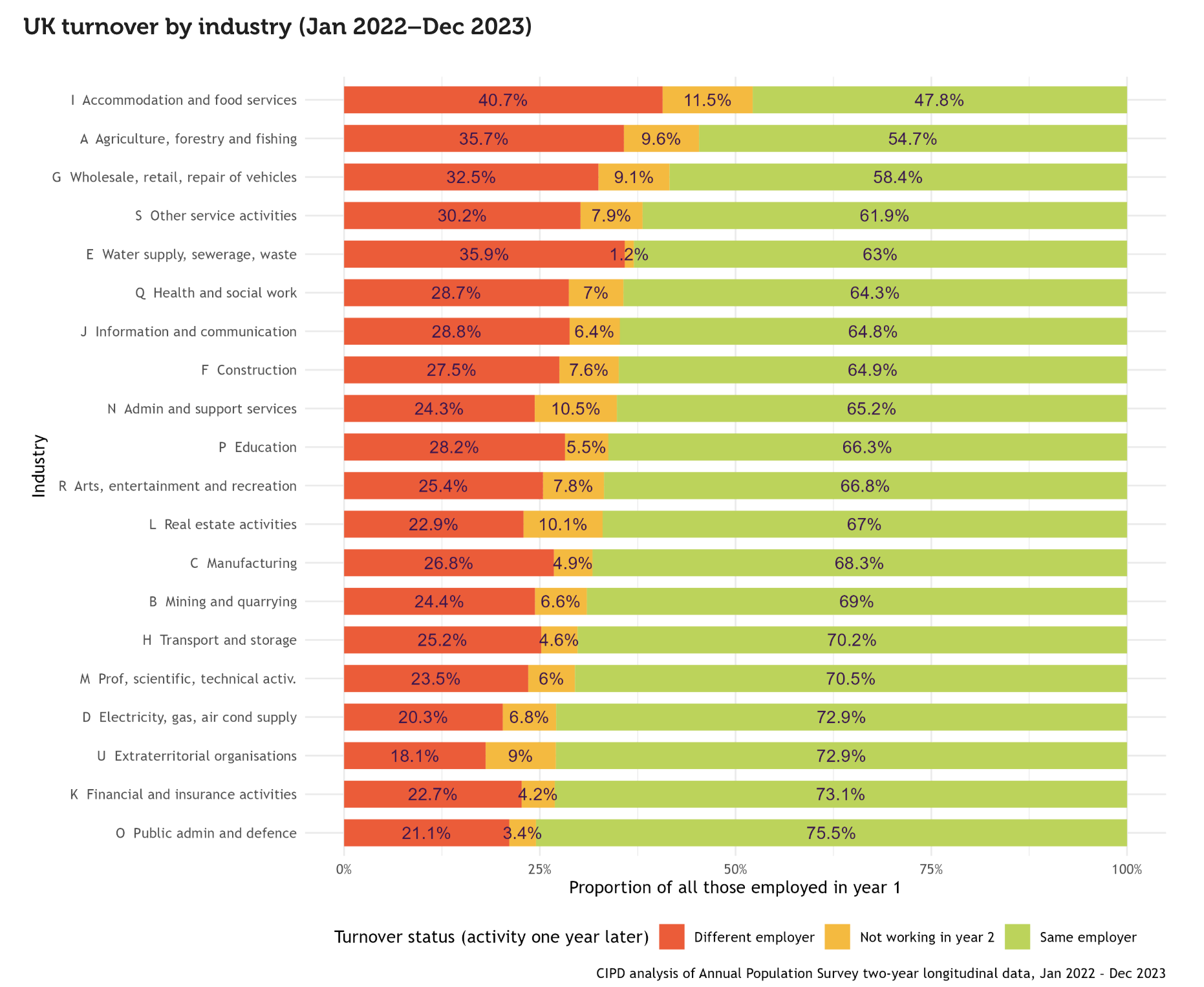
A high turnover can become a lagging indicator of accumulated mental health and workload issues rather than a simple “talent market” problem.
Employees who feel their wellbeing is cared for are significantly less likely to look for a new job and show fewer voluntary departures.
Poor mental health shows up as absenteeism, presenteeism, conflict, and mistakes, which increases pressure on colleagues and fuels a cycle of stress and exits.
In healthy cultures, wellbeing support boosts engagement and productivity, which in turn stabilises teams and reduces churn.
Classic EAPs and in-person counselling are valuable but often underused because of stigma, access issues, wait times, and limited scalability.
Manager-only solutions are fragile: many managers lack the training, capacity, or confidence to have consistent mental health conversations.
When it comes to one-off wellbeing campaigns, they don’t address chronic stressors or provide ongoing coping skills, so they rarely measurably shift retention patterns.
Employees are struggling earlier and more often than traditional support can meet them. This is the gap that needs to be bridged.

Digital mental health platforms are an always-on mental health infrastructure (self-guided tools, live support, data, and insights) and provide four main bridges:
Platforms are not just another benefit; they are a mechanism to turn wellbeing support into lower, more sustainable turnover.

Choosing the right platform is a retention strategy, not just a benefit decision.
High accessibility and integration drive utilisation, while analytics allow HR and finance to continuously optimise ROI.
Turnover is often the cost organisations pay for neglecting mental health.
Digital mental health platforms help leaders spot problems earlier, support people continuously, and shift mindsets from “I have to leave to feel better” to “I can stay and still be well.”

Psychology Content Writer at Siffi
Morgane crafts compassionate, engaging content that makes mental health conversations more human and accessible. At Siffi, she combines storytelling with strategy to foster a culture of care and connection in the workplace.