

Think for a moment about the best team you’ve ever been part of. The one where things just worked. Where people supported each other, solved problems quickly, and even under pressure, there was a sense of energy.
Now, think of the teams where energy was low, communication was unclear, and everyone was polite but distant. The difference between these two teams rarely comes down to skills or headcount.
It comes down to how people feel at work: their mental and emotional state.
“Take care of your employees, and they will take care of your business,” said Sir Richard Branson.
In this piece, we will explore how the most successful companies intentionally, systematically, and humanely perform better through five key habits.
At Siffi, we work with over 50 organizations from tech scaleups to iGaming leaders to large public-sector employers. And what we see again and again is that the companies that thrive don’t just react when people are struggling. They build resilience proactively.
A survey shows that more than four in five employees (87%) stated that their happiness at work directly affects their mood at home. When asked to identify the main source of stress in their lives, over half (52%) cited work, placing it above political or economic uncertainty (36%), and even family issues (31%).
There is a real business case for investing in employees’ mental health. Studies consistently show that every €1 or £1 invested returns €4–€5 in improved retention, engagement, and productivity. (Deloitte Research)
However, to make wellbeing investments effective, companies need a structured approach. That is where we define the Benefits Funnel. Benefits Funnel is like a Sales or Marketing Funnel, starting from the broader base and funnelling down into subsequent stages, where each stage gets closer to initial objective. With Benefits, the ultimate objective is an employee’s satisfaction.
So, we defined these 4 stages for the Benefits Funnel to make benefits work:
Successful companies treat mental wellbeing like finance or marketing: with plans, budgets, and KPIs. They don’t wait for crises; they build structures that prevent them.
We refer to this as the compound-time phenomenon, a productivity metaphor derived from the financial concept of compound interest. It suggests that investing a small amount of time today into high-leverage activities that build intellectual capital and capacity will yield exponentially larger returns in productivity and results over the long term.
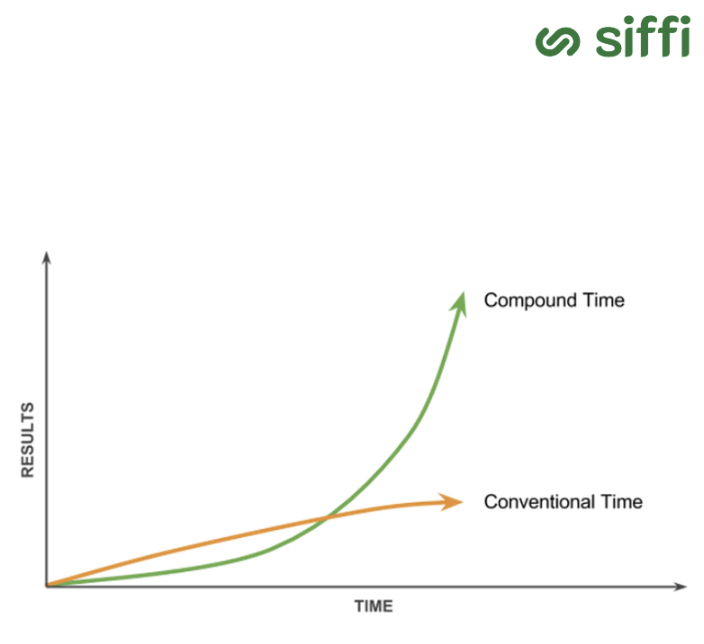
Long-term, a company with a written wellbeing strategy, assigned ownership, manager training, and monthly progress checks will build trust, habits, and shared language—unlike those that only observe a yearly “mental health week.”
“Time is your friend; impulse is your enemy. Take advantage of compound interest and don’t be captivated by the siren song of the market.” — Warren Buffett.
Indeed, Deloitte Canada quantified the ROI of mental health programming across seven Canadian firms at various stages of implementing mental health programs. This research found a median annual ROI of CA$1.62 per dollar invested after the first year, increasing to CA$2.18 after three years.
The second habit is Psychological Safety. Amy Edmondson from Harvard defines it as: “The belief that you won’t be punished or humiliated for speaking up with ideas, questions, or concerns.” (Source)
Google’s Project Aristotle found it was the #1 factor distinguishing their most successful teams.
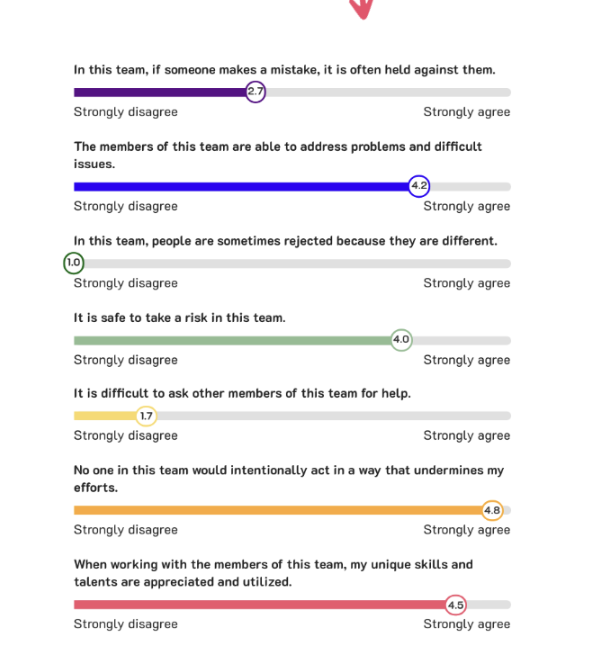
Psychological safety isn’t about comfort; it’s about feeling safe enough to be brave.
The best way to prevent burnout isn’t to talk about burnout; it’s to give people a sense of progress.
That’s why successful companies embed growth opportunities into their rhythm. From leadership programs and team coaching to emotional intelligence workshops.
One HR leader told us recently: “Our coaching program shifted managers from firefighting to foresight.”
Intentions don’t help people; accessibility does. It’s not enough to say, “Support is available.” It has to be visible, quick, and simple.
The most successful companies we work with use a multi-layered approach:
When Entain rolled out Siffi across multiple locations, their HR lead said: “It was a surprise how fast and seamlessly Siffi could start providing the service for all our employees.”
You can’t improve what you don’t measure.
The best companies treat wellbeing data as a compass, not a control mechanism.
At Siffi, we’ve seen companies reduce absenteeism by 15% just by spotting stress trends early.
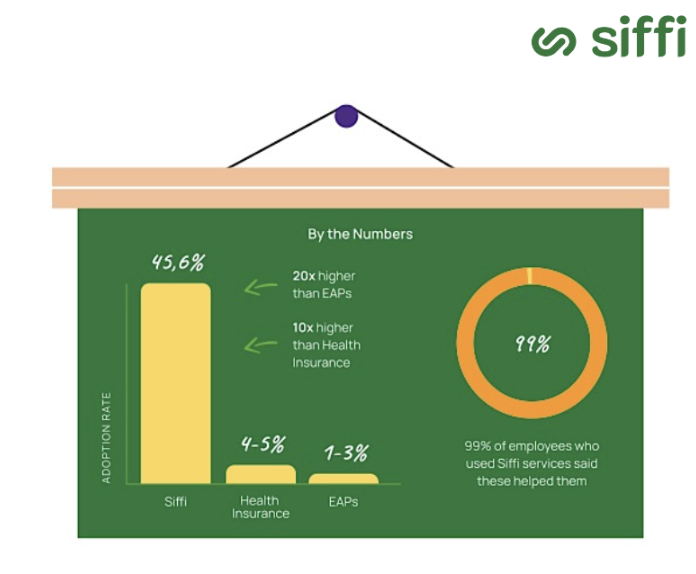
To help your employees transition from surviving to thriving, focus on these five key habits: create a clear strategy, foster psychological safety, offer development programs, make support accessible, and measure employee wellbeing.

Psychology Content Writer at Siffi
Morgane crafts compassionate, engaging content that makes mental health conversations more human and accessible. At Siffi, she combines storytelling with strategy to foster a culture of care and connection in the workplace.